A trial binder that arrives with one missing exhibit, a misfiled declaration, or tabs that do not match the witness outline creates problems at exactly the wrong time. Van Nuys courthouse trial binder printing is not ordinary copy work. It is a controlled litigation production process that must support counsel, staff, witnesses, and the court under real deadline pressure.
For matters headed to the Van Nuys Courthouse, legal teams need production that is accurate, organized, secure, and ready to use upon delivery. That means more than putting paper in a binder. It means confirming the final document set, applying consistent Bates ranges, building a tab structure that matches the trial plan, producing legible copies, and completing a final quality-control review before the binders leave production.
What Court-Ready Trial Binders Require
Trial binders have different users and different purposes. Counsel may need a working set with annotations and witness examination materials. The court may require a clean courtesy set. Witness binders often need only selected exhibits, arranged in a sequence that makes testimony easier to manage. Opposing counsel may need a production that tracks the stipulated exhibit list or a specific order negotiated before trial.
Those sets should not be treated as interchangeable. A reliable production plan identifies who receives each version, what documents belong in it, whether color is necessary, and whether the contents must be one-sided or two-sided. It also establishes how duplicate exhibits, sealed materials, demonstratives, and late-added documents will be handled.
A professionally produced binder generally includes a cover identifying the matter and binder volume, a table of contents, clearly labeled tabs, sequentially organized exhibits, and a consistent Bates convention where applicable. If an exhibit is oversized, fragile, or color-dependent, it requires separate attention. Shrinking a spreadsheet until it is technically printable but practically unreadable does not serve the trial team.
Accuracy Begins Before Printing
The highest-risk errors often occur before a printer is turned on. A final exhibit list may contain outdated filenames, revised document numbers, or exhibits that were withdrawn but remain in a source folder. A sound workflow compares the approved list to the production files and flags discrepancies before assembly.
This is particularly important when several team members have contributed materials. Litigation support may manage Bates numbering, a paralegal may maintain the exhibit chart, and trial counsel may make last-minute changes to the order. A production provider should have a clear point of contact and a documented approval process so that edits do not get lost in email threads or verbal instructions.
Van Nuys Courthouse Trial Binder Printing Under Deadline Pressure
The final days before a hearing or trial rarely follow a perfect schedule. New rulings, revised witness lists, settlement discussions, and late-filed declarations can all affect what must be included. The practical question is not whether changes will happen. It is whether the production process can absorb them without introducing avoidable mistakes.
For van Nuys courthouse trial binder printing, the most effective approach is to separate stable material from changing material. Finalized exhibits can move into production while a defined section remains open for pending materials. This reduces the risk of holding an entire binder set for one unresolved document, while preserving a clear process for final inserts or replacement pages.
There are trade-offs. A fully completed, checked, and shrink-wrapped binder is less convenient to revise at the last minute. Conversely, leaving too much open until the deadline can increase assembly risk. The right balance depends on the number of binders, the volume of exhibits, the hearing schedule, and whether the court requires a specific format.
Color production also requires judgment. Color is often necessary for photographs, maps, charts, emails with color-coded markings, and documents where a visual feature bears on the evidence. For text-heavy files, high-quality black-and-white production may be appropriate and more economical. The objective is not to use color everywhere. It is to preserve the evidentiary value and readability of every exhibit.
A Production Workflow Built for Legal Teams
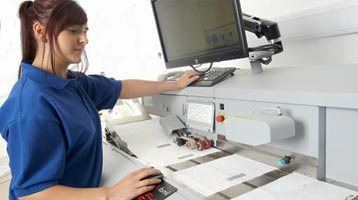
A dependable legal production partner should be able to receive files securely, assess the document set, and identify issues before they affect delivery. For sensitive matters, that process should include controlled file handling, clear instructions, and personnel familiar with legal document standards.
The production team should confirm the binder count, intended recipients, tab language, color requirements, binding method, covers, and delivery deadline. It should also confirm whether exhibits need pre-existing Bates numbers preserved, whether new Bates labels are required, and whether any materials are subject to confidentiality designations or filing restrictions.
Quality control is where litigation printing separates itself from general commercial printing. Page counts should be checked against the source files. Tabs should match the index. Hole punching and binding should be consistent. Pages should be oriented correctly, and double-sided material should not disrupt exhibit pagination or make critical images difficult to view. The final product should be inspected as a usable litigation tool, not simply counted as an order.
For large matters, electronic organization matters just as much as physical assembly. A clean digital exhibit set can support attorney review, last-minute searches, reprints, and follow-on hearing preparation. Firms handling large collections of electronically stored information may benefit from coordinating trial production with their broader eDiscovery, scanning, Bates labeling, and online review workflow rather than managing each stage through separate vendors.
Security and Chain of Custody Are Part of the Job
Trial binders may contain privileged work product, personal information, confidential business records, protected health information, or materials governed by protective order. Sending files to an unvetted print shop or using unsecured consumer file-sharing methods can create a risk that is disproportionate to the perceived convenience.
Legal teams should expect secure file transfer options, documented handling instructions, controlled production access, and careful delivery coordination. If originals are being scanned or copied, chain-of-custody procedures are essential. If a binder contains sealed or restricted material, the packaging and recipient instructions must be unmistakable.
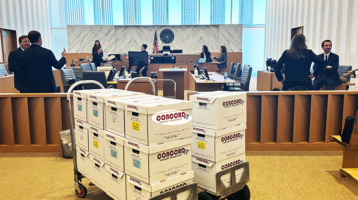
This discipline also protects against a more common issue: misdelivery. A perfectly produced binder delivered to the wrong office, courtroom, or recipient is still a failed production. Confirming delivery details, receiving hours, contact names, and courtroom logistics should be part of the plan, particularly when deadlines fall near holidays, weekends, or early morning appearances.
Choosing a Binder Format That Holds Up in Court
Binding decisions should be based on use, volume, and the likelihood of revisions. Three-ring binders are practical when counsel expects to add or remove documents, when exhibits are divided into substantial sections, or when the set will be used repeatedly throughout trial. They also allow for pockets, divider pages, and replacement inserts.
Cerlox, coil, or other fixed binding methods can work well for shorter courtesy sets, witness materials, or final submissions that should remain intact. They are compact and clean, but they are not ideal when late revisions are likely. Oversized documents, media, and physical demonstratives may require separate folders, boxes, or presentation boards rather than forcing everything into one format.
The best format is the one that makes the material easy to find and easy to use. An impressive-looking binder that is too heavy to handle or too tightly packed to turn pages efficiently can slow down a hearing just as surely as poor organization.
When Experience Changes the Outcome
Complex trial preparation benefits from a provider that understands the relationship between electronic evidence and physical courtroom presentation. Concord Document Technologies supports legal teams with document scanning, legal copying, digital printing, Bates labeling, trial exhibit production, and electronic discovery workflows, backed by 24/7 production capacity and experience with sensitive records.
For matters with compressed schedules, the ability to coordinate digital files, document revisions, physical binder assembly, and delivery through one accountable legal support provider reduces handoffs and uncertainty. That is especially valuable when a team is managing discovery obligations while preparing exhibits for a near-term appearance.
Before authorizing production, provide the approved exhibit list, the final source files, the number and type of sets required, any special handling instructions, and a named person authorized to approve changes. With those decisions established early, your trial binders can arrive as dependable working tools that allow counsel to focus on the argument in the courtroom.