A box of records can look straightforward until it reaches the production floor. Staples, mixed paper sizes, handwritten notes, fragile originals, duplicate sets, privileged materials, and a required load-file format can all change the schedule. Legal scanning turnaround time is therefore not simply a page-per-hour calculation. It is a controlled production process that must preserve document integrity while delivering usable images, searchable text, and reliable metadata on the deadline that matters.
For litigation teams, the better question is not, “How fast can you scan this?” It is, “What must be delivered, in what format, with what quality controls, and by when?” Defining those requirements early protects both the timeline and the defensibility of the resulting production.
What Determines Legal Scanning Turnaround Time
Volume matters, but it is only one part of the schedule. A well-organized collection of standard letter-size documents can move quickly through preparation, scanning, quality control, and delivery. A comparable page count containing bound materials, oversized drawings, color exhibits, thermal paper, medical records, or heavily tabbed files requires more hands-on work.
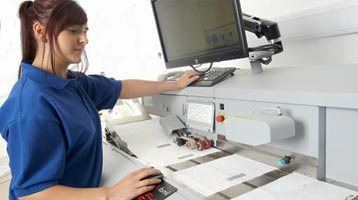
Document preparation is often the first variable clients underestimate. Before imaging begins, a production team may need to inventory boxes, remove staples and bindings, repair torn pages, separate sticky notes, identify foldouts, and maintain the original document order. If the source records are evidence, a disciplined chain of custody and documented handling procedures are part of the work, not an optional administrative step.
Image specifications also affect timing. Black-and-white TIFF images are common for many litigation workflows, but color imaging may be necessary where highlighting, annotations, photographs, or color-coded information has evidentiary value. Higher resolution, image optimization, and special handling for faint or degraded documents can improve usability, but each adds production time.
The requested deliverables matter just as much as imaging. A basic scanned PDF is different from a litigation-ready set with Bates numbering, OCR text, document-level coding, slip sheets, confidential designations, and load files for an eDiscovery platform. When attorneys need the data loaded into RelativityOne or another review environment, field mapping, validation, and exception handling must be included in the schedule.
A Realistic Timeline Starts With Scope
A reliable estimate begins with a short but specific intake conversation. The scanning provider should understand the approximate page count, number of boxes or binders, document condition, desired output, deadline, pickup or onsite requirements, and any protective-order or security restrictions. A matter with 50 boxes headed to review has different needs than a set of trial exhibits that must be printed, tabbed, and delivered to court the next morning.
For routine, scan-ready records, same-day or next-day production may be achievable depending on volume and capacity. For larger collections, a phased schedule is often the stronger approach. Priority boxes can be scanned and delivered first so the legal team can begin review while the remaining collection proceeds through production.
This approach is particularly valuable when a deposition, meet-and-confer, regulatory response, or trial date is approaching. Rather than waiting for every page to be complete, counsel can identify the custodians, categories, or date ranges that need immediate access. Production resources can then be aligned to the legal team’s actual priorities.
A provider should be candid when the requested deadline creates a quality risk. Fast work is valuable only if pages are complete, legible, correctly oriented, and properly associated with their source documents. A missed back page, an unreadable exhibit, or a Bates sequence error can create more pressure than a realistic production schedule would have.
The Work Behind a Defensible Scan Set
Legal scanning is not finished when paper becomes an image file. Quality control should verify that documents were captured completely, pages are legible, and file names or Bates ranges align with the production specification. OCR should be checked for reasonable searchability, especially where the collection includes poor originals, stamps, handwriting, or unusual fonts.
For sensitive matters, security controls must remain in place through every stage. That includes secure transfer, access controls, documented custody, protected storage, and clear procedures for handling originals after scanning. Government agencies, regulated businesses, and AM Law firms often require these controls because the records may contain personally identifiable information, trade secrets, protected health information, or confidential investigative material.
Indexing introduces another level of decision-making. A simple box-folder-page structure may be enough for archive retrieval. Litigation review may require coded fields such as custodian, document date, document type, confidentiality status, or source location. The more fields that must be captured or normalized, the more time should be allocated for validation.
There is a trade-off here. Extensive indexing can make downstream review and retrieval more efficient, but coding every available field is not always cost-effective or necessary. A strong production plan identifies the metadata that will materially support review, discovery obligations, or trial preparation, then applies controls appropriate to that need.
How to Reduce Delays Before Scanning Begins
The fastest projects are rarely the ones with the shortest deadlines. They are the projects where the legal team makes clear decisions before materials arrive. Confirm whether originals must remain in a particular order, whether color is required, which documents need priority handling, and what output format the review team expects.
When possible, separate materials that require special treatment. Oversized documents, bound books, photographs, fragile records, and media should be identified at intake rather than discovered midway through a rush job. If the collection includes both active case materials and closed-file archives, label them separately so the production team does not apply litigation-level processing where a basic searchable PDF would be sufficient.
Clear naming conventions also prevent avoidable rework. Decide whether files should be named by box and folder, Bates range, custodian, or another agreed structure. If a database or review platform will receive the data, provide the required field names and load-file specifications before production begins.
For onsite scanning, confirm workspace access, building requirements, network availability, security procedures, and the hours during which records can be handled. For offsite work, schedule a secure pickup and provide an accurate inventory. These details can determine whether a project begins immediately or loses a day to logistics.
When Rush Legal Scanning Is the Right Choice
Rush service is appropriate when a true legal event requires it: an imminent hearing, a deposition exhibit deadline, a court-ordered production, an emergency regulatory response, or a last-minute trial preparation need. In those circumstances, 24/7 production capacity and a provider experienced in legal workflows can make the difference between a controlled response and an all-night scramble.
But rush handling should not mean undefined handling. Even under pressure, the scope should state the priority materials, image requirements, Bates range, delivery milestones, and recipient contacts. A staged delivery can be more useful than one final delivery at the end of the shift, especially if attorneys need time to review, mark exhibits, or prepare filings.
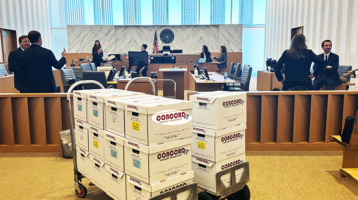
In Southern California, where a trial team may need exhibit binders delivered overnight to Stanley Mosk Courthouse, First Street Federal Courthouse, or a Superior Court location, scanning is often only one part of the assignment. The operational advantage comes from coordinating imaging, printing, Bates labeling, tabs, binders, and final delivery through one accountable legal support team.
Choose Capacity, Not Just a Promised Date
A promised turnaround is meaningful only when the provider has the staff, equipment, quality controls, and legal production experience to support it. Ask how the collection will be tracked, who reviews exceptions, how originals are secured, and what happens if the volume differs from the initial estimate. Those answers reveal more than a generic turnaround claim.
Concord Document Technologies supports paper-to-digital workflows, legal copying, eDiscovery review preparation, and trial exhibit production for matters where timing and confidentiality cannot be separated. The goal is not simply to scan faster. It is to provide a controlled, usable production that lets counsel act with confidence when the deadline arrives.