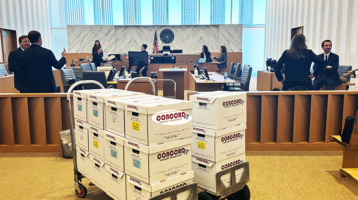
A production deadline can turn a banker’s box of mixed records into a case-critical problem overnight. Litigation copying services are not simply about reproducing paper. They are about creating accurate, secure, usable records that counsel can review, produce, file, and present without questioning what was missed, altered, mislabeled, or delayed.
For high-stakes matters, the right provider operates as an extension of the litigation support team. That means understanding chain of custody, protective orders, confidentiality designations, court-specific filing requirements, production specifications, and the practical pressure of a hearing date that will not move.
What Litigation Copying Services Must Deliver
A dependable litigation copying workflow begins with control. Originals must be logged, tracked, and handled by trained personnel. Whether the source material is a set of medical records, construction files, personnel documents, financial ledgers, or decades of correspondence, each box, folder, and document set should be accounted for from intake through return or secure disposition.
The copying itself must also be fit for its intended use. A quick black-and-white duplicate may be sufficient for internal working copies, but color can be essential where highlighting, handwritten annotations, photographs, charts, or redactions carry meaning. Oversized plans, fragile originals, tabbed binders, and documents with irregular dimensions require equipment and handling procedures that preserve both legibility and order.
Quality control is where routine copying becomes defensible litigation support. Page counts, image clarity, orientation, missing-page checks, and file naming should be verified before a production leaves the facility. When a matter requires Bates numbering, confidentiality legends, slip sheets, or endorsement language, those elements must be applied consistently across every volume and every electronic file.
From Paper Records to Review-Ready Data
Many cases still begin with paper, but few remain paper-only. Litigation teams need a provider that can move documents into a defensible electronic workflow without creating a gap between the physical evidence and the review platform.
High-volume document scanning converts paper collections into searchable image files using optical character recognition. OCR is valuable because it helps attorneys and reviewers locate names, dates, contract terms, and key phrases without reading every page manually. Still, OCR is not a substitute for quality review. Handwriting, faint copies, unusual fonts, stamps, and poor originals can produce imperfect text, so teams should confirm what level of searchability and image validation the matter requires.
A properly prepared electronic document set can then be organized for attorney review, production, or loading into a platform such as RelativityOne. This may include document-level metadata, custodial information, parent-child relationships, folder labels, and production numbering. The objective is not merely to scan pages. It is to create information that remains usable as the matter moves from collection to review, discovery, dispositive motion practice, and trial.
The Value of a Single Chain of Custody
Using one provider for physical copying, scanning, electronic processing, and trial production reduces handoffs. Fewer handoffs generally mean fewer opportunities for records to be misplaced, duplicated inconsistently, or separated from their intake history.
This does not mean every matter needs an all-inclusive workflow. A small dispute may only need a clean set of copies and a secure digital delivery. A regulatory investigation, class action, government inquiry, or complex commercial matter may require onsite collection, forensic preservation of phones and email, large-scale scanning, hosted review, rolling productions, and exhibit preparation. The scope should match the stakes, volume, and deadlines of the engagement.
Security Is Part of the Production Standard
Legal records often contain privileged communications, personally identifiable information, protected health information, trade secrets, or law enforcement-sensitive material. A low-cost copy operation that cannot explain its access controls, facility security, staff procedures, and handling practices creates unnecessary exposure.
Ask how originals are received and logged, who has access to the work area, how completed files are transferred, and how temporary working materials are managed. For sensitive matters, bonded and insured personnel, controlled production environments, documented chain-of-custody procedures, and secure delivery methods matter as much as image quality.
Confidentiality designations also require care. Applying “Confidential,” “Highly Confidential,” or similar legends to the wrong pages can create avoidable disputes. Failing to apply them where required can be worse. The production team should work from written instructions, test a sample where appropriate, and maintain a clear record of the specifications used.
Trial Preparation Is Where Details Become Visible
The weaknesses in a document workflow often surface during trial preparation. A mislabeled exhibit, a missing color page, an unreadable scan, or a binder assembled in the wrong order can disrupt a witness examination and consume valuable courtroom time.
Trial exhibit production requires a different level of coordination. Counsel may need numbered exhibit binders, deposition designations, demonstratives, tabs, dividers, enlarged boards, courtroom presentation copies, and electronic versions for the trial team. Every format must align. If Exhibit 142 is a color email chain in the witness binder, it should be the same Exhibit 142 in counsel’s binder, the court copy, the electronic folder, and any presentation database.
Timing matters as much as consistency. Firms in Los Angeles handling matters at Stanley Mosk Courthouse, First Street Federal Courthouse, or Superior Court locations may need trial binders delivered on a compressed schedule. A provider with 24/7 production capacity and overnight shipping capability can protect the team when an exhibit list changes late in the evening or a court order requires a next-morning filing.
Questions to Ask Before Selecting a Provider
The right questions reveal whether a vendor can handle the assignment beyond the sales conversation. Start with capacity: Can the provider manage your expected volume while meeting the deadline? Then ask about production controls, including page-level quality checks, Bates numbering verification, color management, and procedures for documents that do not scan cleanly.
It is also reasonable to ask whether the provider has experience with your matter type. Healthcare records, public-sector files, financial investigations, and construction disputes each present different document challenges. Experience does not replace clear instructions, but it helps a production team anticipate issues before they become expensive.
Finally, clarify communication. A responsive project manager should be able to confirm receipt, identify exceptions, report progress, and escalate time-sensitive decisions. During an active litigation deadline, silence is not a service model.
When Speed and Precision Must Work Together
Fast turnaround is valuable only when it does not compromise accuracy or security. A provider should be able to explain how it prioritizes urgent jobs, separates rush work from other client matters, verifies final output, and delivers materials securely. The correct answer may differ depending on whether the work involves internal case files, court-filed materials, or a regulated production subject to a protective order.
Concord Document Technologies supports law firms, corporations, and government agencies with document copying, scanning, electronic discovery, forensic collection, online review, and trial exhibit production under one accountable engagement. With production support built for sensitive and document-intensive matters, the focus remains practical: get the right records into the right hands, in the right format, on time.
When the record will be reviewed by opposing counsel, relied on by an expert, or placed before a judge or jury, treat copying as part of the case strategy. Clear instructions, disciplined handling, and verified production give the legal team one less uncertainty to manage when the pressure is highest.