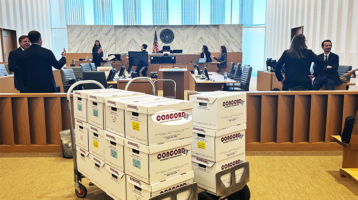
A bankruptcy matter can change pace without warning. A hearing is advanced, a creditor matrix is corrected, a trustee requests a supplemental record, or counsel needs a clean exhibit set before the clerk’s office closes. Bankruptcy printing is not ordinary office output in these moments. It is a controlled production process that protects sensitive information, preserves document integrity, and puts the right paper record in the right hands on time.
For law firms, corporate legal departments, and government agencies, the risk is rarely limited to a printer malfunction. A missing attachment, inconsistent pagination, unreadable scan, incorrect recipient list, or late delivery can create avoidable pressure in a matter already governed by strict procedural requirements. The production partner must understand that speed matters, but accuracy, confidentiality, and accountability matter just as much.
What Bankruptcy Printing Must Accomplish
Bankruptcy files often combine court pleadings, schedules, statements, claims documentation, financial records, correspondence, tax materials, discovery, and hearing exhibits. Some documents originate electronically; others arrive as boxes of historical records, handwritten notes, or mixed-size financial statements. The printing workflow has to bring order to that material without altering it.
A dependable production process begins with clear instructions: what must be printed, how copies should be organized, which records require Bates numbering, whether tabs or divider sheets are needed, and where the finished work must go. That sounds basic, but ambiguity at intake is a common source of rework. A production team should confirm the version of record, required quantities, recipient destinations, finishing specifications, and delivery deadline before a job enters production.
The objective is not simply to create paper. It is to produce a usable legal record. Pages should be complete, consistently oriented, legible, and arranged so attorneys, trustees, creditors, and court personnel can locate key material quickly. For hearing binders and exhibit sets, that includes durable assembly, accurate tabs, and a logical sequence that tracks the case team’s presentation plan.
Secure Handling Is Part of the Production Standard
Bankruptcy records can contain personal identifiers, account information, payroll data, medical information, trade secrets, and confidential business records. A production provider must treat these files as sensitive from receipt through delivery.
That means using controlled file transfer and access procedures, limiting handling to authorized personnel, maintaining clear job instructions, and accounting for physical materials while they are in production. When original paper records or storage media are involved, documented chain of custody is especially important. The question is not only whether the final set looks correct. The case team must be able to trust how the underlying information was handled at every stage.
Redaction deserves particular attention. Printing is not a substitute for a properly reviewed redaction process. If documents contain information that must be withheld or protected, the legal team should establish the redaction protocol before production. A qualified provider can produce the approved version accurately, but counsel remains responsible for determining what information should be filed, served, or disclosed.
Common Bankruptcy Printing Workflows
The right workflow depends on the posture of the matter. A Chapter 11 case with substantial financial reporting and multiple stakeholders will place different demands on production than a consumer bankruptcy filing or a contested claims dispute. Still, several needs appear repeatedly.
Filing and Service Sets
Pleadings, declarations, motions, proposed orders, and supporting exhibits may require precisely assembled filing or service sets. Page order, staple placement, hole punching, tabbing, and copy counts should match the requirements of the relevant court, judge, or recipient. Local rules and individual chambers practices can vary, so the case team should provide the operative instructions rather than assuming one format works everywhere.
Where electronic filing is the primary method, paper production still has a role. Attorneys may need working sets for review, courtesy copies where permitted or required, service packages, client records, or hearing preparation. The key is producing from the final approved version, not an earlier draft that remains in a shared folder.
Creditor Notices and Mailings
Notice projects demand discipline at scale. A mailing may involve hundreds or thousands of recipients, each requiring a correct address, complete enclosure package, and documented mail preparation process. Address lists should be validated by the responsible case team before printing begins, especially after matrix updates or returned-mail corrections.
The physical package matters as much as the recipient data. Missing pages, mixed enclosures, or incorrect duplex settings can undermine the notice effort. For high-volume work, sample approval and documented quality checks are practical safeguards before the full run is released.
Hearing Binders and Exhibits
A well-built hearing binder helps counsel work faster under pressure. It should open cleanly, stay organized, and make the critical record easy to find. Consistent exhibit labels, searchable digital counterparts when requested, color reproduction where it carries evidentiary value, and correctly placed tabs are all production details with courtroom consequences.
Not every exhibit needs color printing, and not every matter needs a large tabbed binder. Black-and-white copies may be appropriate for routine pleadings or text-heavy records. Color is often justified for charts, emails with highlighted content, photographs, maps, accounting reports, or documents where visual distinction is material. The practical choice depends on usefulness, budget, and the intended audience.
Scanning and Paper-to-Digital Conversion
Bankruptcy teams frequently receive legacy records in paper form. Before those materials can be reviewed, searched, produced, or printed as a coherent set, they may need scanning, image cleanup, optical character recognition, indexing, and quality control. Properly executed scanning creates a usable digital collection while preserving the ability to reproduce source documents when needed.
This is where a combined document and eDiscovery provider can reduce handoffs. Records may be scanned, coded, Bates labeled, loaded for attorney review, and later produced as hard-copy hearing materials under one managed workflow. Fewer transfers between vendors can mean fewer opportunities for version confusion and less administrative burden on the legal team.
Quality Control That Protects the Record
Quality assurance should be built into bankruptcy printing rather than performed only at the end. The most effective checks occur at multiple points: file intake, proof approval, production setup, finishing, and final packaging. For complex or time-sensitive matters, it is wise to identify a single point of contact who can answer questions quickly and authorize changes.
The final inspection should confirm more than page count. The team should verify that scanned images are readable, attachments are present, Bates ranges are correct where applicable, tabs match the index, color pages reproduce properly, and each destination package contains the right materials. If delivery is required, the package should be labeled for the proper recipient and tracked through completion.
Version control is equally important. Bankruptcy matters generate revisions constantly, particularly near filing and hearing deadlines. The safest approach is to use a clear naming convention and require affirmative approval of the production-ready file. A document called Final may not be final. A file identified by date, time, matter number, and version is far less likely to be confused with a superseded draft.
Selecting a Provider for Time-Critical Matters
The provider’s equipment matters, but operating discipline matters more. Ask whether the team can accept jobs after hours, manage rush requests, protect confidential records, handle both paper and electronically stored information, and deliver to the required destination. Confirm who oversees the project, how status updates are communicated, and what happens if a late change affects a large production run.
Capacity should be evaluated realistically. A vendor may handle a small rush job well but struggle with a multi-recipient notice project, overnight trial binders, or a combined scanning and print engagement. Look for experience with sensitive legal records, documented procedures, bonded and insured operations, and the ability to scale without moving the work through an uncontrolled chain of subcontractors.
Concord Document Technologies supports high-stakes legal production with 24/7 capacity, secure document handling, scanning, legal copying, digital printing, exhibit production, and overnight delivery support for court-bound materials. For teams managing matters in Southern California and beyond, that breadth can be valuable when a bankruptcy file moves from paper intake to attorney review to a court-ready binder on a compressed schedule.
The most useful production partner is the one that makes the next deadline feel manageable. Establish the workflow before the emergency arrives, identify the approval path, and ensure the team responsible for bankruptcy printing can deliver a complete, secure, court-ready record when the matter demands it.