A missed production deadline is rarely caused by one dramatic failure. More often, it begins with a device that was not preserved correctly, a box of paper records that was never indexed, an exhibit list that changed late in the evening, or a review team waiting for documents to become searchable. The value of Concord Document Service serving law firms for 30 years is not simply longevity. It is the operational judgment that comes from handling the document and data demands that put legal matters at risk.
For litigation teams, corporate legal departments, and government agencies, the work does not divide neatly between paper and electronic evidence. A matter may involve legacy personnel files, iPhone messages, cloud email, hard-copy exhibits, and a production schedule dictated by the court. The provider supporting that matter must be prepared to manage the full chain from collection through review, production, and trial presentation.
Why 30 Years of Legal Document Service Matters
Experience matters in legal support because the consequences of a process failure are immediate. A poorly tracked original can create a chain-of-custody question. An incomplete collection can leave relevant evidence outside the review population. A production that does not conform to agreed specifications can force costly rework when time is already limited.
Three decades of service means understanding that document work is not clerical work. It is a controlled legal workflow. Every intake decision affects what follows: how materials are secured, how they are scanned, whether they are OCR searchable, how they receive Bates numbers, where they are hosted, and how they are produced.
Concord Document Technologies has operated since 1996, supporting matters where volume, confidentiality, and timing cannot be treated as secondary concerns. That history is especially valuable when a legal team needs more than a vendor that can complete a single task. They need a partner that can identify dependencies before they become delays.
The Difference Between Capacity and Readiness
Many providers can scan a box or print a binder. Fewer can respond when the scope changes after business hours, when counsel needs overnight trial exhibits, or when a data source must be preserved before it changes. Production capacity matters, but readiness is what turns capacity into dependable service.
A 24/7 operation gives legal teams a practical advantage during filing deadlines, emergency hearings, and trial preparation. It allows a production plan to adjust when a deposition changes the exhibit set or when a court requests additional copies. The goal is not to create urgency for its own sake. It is to give counsel a reliable path forward when the matter has already become urgent.
One Matter, Multiple Evidence Types
The strongest legal support workflows connect physical documents and electronically stored information rather than forcing a law firm to manage separate providers. This matters because mixed evidence is now routine. A dispute may begin with employee emails and expand into mobile-device communications, archived paper files, spreadsheets, and third-party records.
The right approach depends on the matter. A smaller collection may require targeted preservation and rapid processing. A regulatory investigation may require defensible collection practices, detailed documentation, and a broader review environment. A trial team may need polished demonstratives and exhibit binders while discovery continues in parallel.
Forensic Collection Requires Discipline
Forensic data collection from iPhones and email accounts should begin with a defined scope and a defensible process. Counsel must be able to explain what was collected, when it was collected, who handled it, and how the source data was protected. That discipline is particularly important in employment matters, internal investigations, trade secret disputes, and regulated proceedings where message content and metadata may both be relevant.
Speed is important, but speed without process can create a new problem. A collection plan should account for preservation needs, custodians, access credentials, potential personal data, and the format needed for downstream review. The best path is often a focused one, but focus must be based on legal strategy and reliable technical handling, not convenience.
Paper Records Still Demand a Defensible Workflow
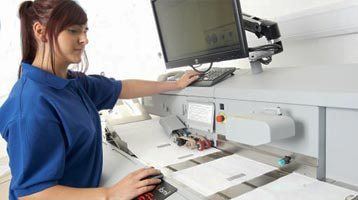
Paper has not disappeared from high-stakes matters. Medical records, historical project files, personnel records, signed agreements, government archives, and handwritten notes may exist only in physical form. Onsite or offsite scanning can bring those records into the matter quickly, but the work should preserve order, identify exceptions, and produce searchable images that are useful to reviewers.
Bates labeling, document coding, quality control, and production formatting should be coordinated from the beginning. Scanning without an agreed naming convention or indexing strategy can create confusion later. A deliberate workflow gives attorneys and paralegals the ability to locate documents without reopening boxes, repeating scans, or questioning whether the image set is complete.
Review Technology Must Support Legal Strategy
Online attorney review is valuable when it reduces the friction between data collection and legal analysis. A RelativityOne-based review environment can help teams organize documents, apply search terms, tag responsiveness and privilege, and prepare productions with consistent controls. Technology is not a substitute for review judgment, but it can make that judgment faster and more traceable.
The platform should fit the case, not the other way around. For a narrow, time-sensitive matter, a straightforward workspace with clear review protocols may be the right answer. For a large investigation or multiparty litigation, the team may need more sophisticated analytics, permission controls, reporting, and production management.
What should not change is the expectation of support. Review teams need reliable loading, searchable data, clear issue escalation, and people who understand the legal consequences of a processing or production decision. When documents are central to the matter, review infrastructure is part of case preparation.
Trial Production Is a Separate Operational Test
Discovery production and trial production are related, but they are not the same job. At trial, the question is no longer whether records can be processed. The question is whether the right exhibit is ready, accurate, readable, and available when counsel needs it.
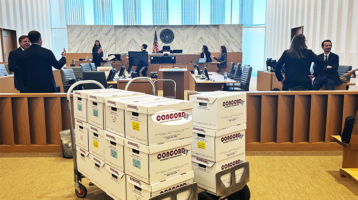
Trial exhibit binders often require last-minute updates, courtroom-specific delivery, and careful attention to tabs, labels, numbering, and copy counts. In Southern California, overnight delivery to Stanley Mosk Courthouse, First Street Federal Courthouse, and Superior Court locations can be the difference between a controlled morning and a rushed one. For matters outside the region, overnight FedEx shipping extends that same practical support.
Digital printing and exhibit production should be handled with the same precision as discovery. A misplaced page, an outdated exhibit list, or an inconsistent label can distract from the argument counsel intends to make. Trial teams need a production partner that treats these details as part of the legal record, not as ordinary print work.
Security Is Part of Service Quality
Sensitive legal materials require more than a confidentiality statement. They require controlled handling, trained personnel, secure workflows, and accountability from intake through delivery. Bonded and insured service provides an added layer of confidence for matters involving confidential business information, personally identifiable information, protected health information, or government records.
Security also has an operational dimension. The fewer handoffs a matter requires, the fewer opportunities there are for lost context, duplicated effort, and inconsistent instructions. Working with one provider for scanning, copying, forensic collection, eDiscovery, review support, printing, and trial exhibits can create clearer accountability across the life of a matter.
That does not mean every matter needs every service. Some teams have established review platforms or internal litigation support resources. In those situations, targeted support for collection, imaging, overflow production, or trial preparation may be the better fit. The important question is whether the provider can integrate with the team’s existing process without creating a new administrative burden.
Concord Document Service Serving Law Firms for 30 Years
For 30 years, the essential standard has remained the same: legal teams need accurate work, protected information, and dependable execution under pressure. The technology has changed, the sources of evidence have multiplied, and the pace of litigation has accelerated. Yet the core requirement is still trust.
When the next matter includes a late-night production, a device collection, a warehouse of paper records, or a trial calendar that leaves no room for error, choose support built for the full workload. The right document services partner does not merely move files and print pages. It helps the legal team keep control of the record when control matters most.