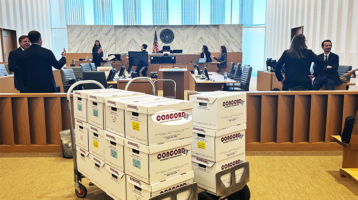
A rolling production rarely fails because one file was missed. It fails when deadlines move faster than the team’s process. A first tranche goes out, a second batch follows after additional custodian data is collected, then privilege calls change, Bates ranges overlap, and no one is fully certain what the other side has received. That is why knowing how to manage rolling document productions matters – not just for speed, but for defensibility, consistency, and control.
In high-stakes litigation, investigations, and regulatory matters, rolling productions are often unavoidable. New custodians are identified. Mobile data arrives late. Email collections expand. Hard-copy files are scanned in stages. Courts and agencies may expect prompt, ongoing production rather than one final delivery. The practical question is not whether production will roll. It is whether your workflow can keep up without creating downstream risk.
How to manage rolling document productions without losing control
The core discipline is to treat each production as part of one governed system, not as a series of isolated exports. That means the production protocol, review rules, numbering logic, privilege handling, and delivery records all need to stay consistent from day one.
A matter team should establish production governance before the first document leaves review. If you wait until the first deadline is imminent, the team will make local decisions under pressure. Those decisions are usually the source of later disputes. File naming conventions shift. Placeholder language changes. Redaction settings are handled differently by different operators. Metadata fields included in load files vary from batch to batch. Opposing counsel may tolerate one inconsistency, but repeated inconsistency invites motion practice.
Start by fixing the production standard. Confirm format, image settings, searchable text treatment, metadata fields, Bates prefix structure, confidentiality designations, and handling for native files, embedded objects, and family relationships. If there is an ESI order or negotiated protocol, operationalize it into a production checklist that can actually be followed by litigation support, vendor teams, and review managers.
That checklist should also define exception handling. Some documents will not image cleanly. Some spreadsheets need native production. Some mobile messages may require screenshots, exports, or special formatting. Rolling matters get complicated when exceptions are decided ad hoc. A documented exception path keeps later productions aligned with earlier ones.
Build a production log that answers the hard questions
Every rolling production should be traceable in a single master log. This is not just an internal convenience. It becomes the record that protects your team when questions arise about completeness, timing, or what was included in a particular tranche.
A reliable production log should track at least the production date, production volume identifier, Bates start and end, document count, page count if applicable, custodians or source collections, confidentiality treatment, native file counts, and any notable exceptions. It should also record what was withheld, what was clawed back, and whether replacement images or corrected load files were sent.
The log should not live in fragmented email chains or personal spreadsheets. One controlled source of truth is essential. In larger matters, the production log should be tied to the review platform and the processing record so the team can reconcile what was collected, what was reviewed, what was marked responsive, and what was actually produced.
This is where many legal teams lose time. They can produce documents, but they cannot quickly explain the production history. If opposing counsel says a Bates range is missing, or a court asks when a category was produced, the answer should be available in minutes, not after a day of internal reconstruction.
Keep review decisions stable across waves
Rolling productions put unusual pressure on review consistency. Early review calls shape later productions, but later facts may change responsiveness or privilege determinations. The answer is not to freeze judgment. It is to control how judgment changes.
Use a stable coding protocol with clear decision rules. Review teams should know how to apply responsiveness, issue tags, confidentiality, and privilege across all waves of incoming material. If the team expands, train later reviewers on the same protocol used by the original reviewers. Drift between reviewer groups creates uneven productions and unnecessary quality-control burdens.
Privilege deserves particular care in rolling matters. If the privilege standard evolves over time, older production sets may no longer align with newer withholding decisions. That does not always mean the earlier call was wrong. It does mean someone needs ownership of privilege harmonization. The same applies to redactions. A rolling production is not defensible if similar documents are treated differently simply because they were reviewed in different weeks.
Search term changes, analytics updates, and new custodian information can also affect consistency. When the dataset expands, the team should document why the scope changed and whether prior collections or review decisions need to be revisited. Sometimes the right answer is yes. Sometimes proportionality supports moving forward. What matters is that the decision is reasoned and documented.
Production QC has to be repetitive by design
Quality control in rolling productions is not a final checkpoint. It is a recurring operational process. Each batch needs the same disciplined review before release, even when deadlines are tight.
At minimum, QC should confirm Bates numbering continuity, correct confidentiality endorsements, image readability, redaction burn-in, placeholder consistency for natives, family completeness, and alignment between images, text, and load files. Metadata validation matters as much as visual validation. A production set that looks correct but contains broken delimiters, mismatched document IDs, or shifted field values can create avoidable disputes and rework.
It is also wise to perform cross-batch QC. That means checking whether the current tranche is consistent with prior productions in format, branding, load-file structure, and handling rules. A one-off technical error can usually be corrected. A pattern of variation suggests process breakdown.
For hybrid matters involving both paper and ESI, QC needs to account for source differences. Scanned hard-copy documents may introduce OCR issues, unitization questions, slip sheet needs, or document break errors that do not exist in email and native-file workflows. A provider with both legal scanning and eDiscovery capabilities can reduce friction here because physical and electronic production standards can be managed under one operating framework.
Coordinate collection, processing, and production as one timeline
Rolling productions often break down because teams treat collection, processing, review, and output as separate tracks. In practice, they are one timeline with dependencies.
If forensic mobile collection is still underway, review managers need realistic notice about what is coming and when. If new email containers are being processed, production leads need to know whether deduplication or threading decisions could change volume expectations. If onsite scanning is feeding paper records into the review database, someone has to manage document priority so the most time-sensitive records reach review first.
This coordination is especially important when multiple data types are involved. iPhone collections, email archives, shared drive files, and banker boxes do not move at the same speed. A rolling production plan should reflect that reality. It may be appropriate to produce clean email and office-document sets first, while reserving more complex mobile or oversized paper material for later tranches. That is not a weakness if it is managed transparently and in line with the governing protocol.
Institutional matters also benefit from a single production owner. That person does not have to perform every task, but they should control the schedule, the log, the protocol, and the release decision. Shared responsibility sounds efficient until a deadline hits and no one can confirm whether the final load file was the approved version.
When to escalate before a small issue becomes a production problem
Not every production issue requires formal escalation, but some do. Repeated redaction inconsistencies, uncertain privilege calls, corrupted source files, unexplained Bates gaps, and changes in negotiated format should move quickly to decision-makers. The cost of escalation is usually lower than the cost of fixing a defective production after delivery.
The same is true when the other side’s requests shift in ways that affect workflow. If rolling productions are expanding beyond the original scope, counsel may need to revisit sequencing, burden, or protocol terms. Production teams should flag that pressure early. Good operations support good legal strategy, but they cannot replace it.
For matters under intense time pressure, round-the-clock production capacity can make a real difference, especially when scanning, processing, hosting, review support, and final output need to move in close sequence. Concord Document Technologies has worked in exactly these conditions for law firms, corporations, and government agencies that cannot afford preventable production errors.
The best rolling production process is not the one that looks fastest in a kickoff meeting. It is the one that still holds together on the fourth deadline, after new custodians are added, privilege calls tighten, and the court wants answers by morning. Build for that moment, and the work becomes more manageable than it first appears.