A Santa Monica copy service is not simply a place to run litigation copies. When a hearing is approaching, a production is due, or a trial team needs exhibit binders in hand, the work requires document control, speed, confidentiality, and a clear understanding of legal formats. One misplaced page, inconsistent Bates range, or late delivery can create avoidable pressure on an already demanding matter.
For law firms, corporate legal departments, and government agencies, the right provider should manage physical and electronic records as part of one coordinated workflow. That means preparing paper files for review, scanning and indexing records, producing discovery sets, applying litigation stamps, printing court-ready documents, and delivering trial materials where and when the legal team needs them.
What a Legal Santa Monica Copy Service Should Handle
Legal copying is a production discipline. A reliable provider must be ready to receive mixed paper files, native electronic files, emails, spreadsheets, photographs, and oversized exhibits, then convert those materials into accurate, usable work product.
At the most basic level, copying may involve high-volume duplication, color reproduction, tabbed sets, document assembly, and delivery. But complex matters often require more: Bates labeling, confidentiality legends, OCR, coding, searchable PDFs, deposition exhibits, privilege logs, exhibit lists, and production sets formatted for opposing counsel or regulators.
The difference matters because legal teams do not have time to inspect every page after it leaves production. They need confidence that instructions were followed exactly, that the correct version was used, and that the final set is complete.
Scanning and OCR for Active Case Files
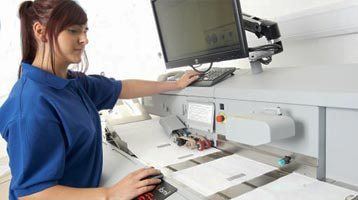
Paper files remain common in employment matters, real estate disputes, insurance claims, internal investigations, and long-running litigation. A legal copy service should be able to scan these records at production volume while preserving page order, document boundaries, and image quality.
OCR turns image-only documents into searchable files, allowing attorneys and reviewers to locate names, dates, account numbers, and key language without reading every page manually. The usefulness of OCR depends on the source material. Clean, typed pages generally produce strong results, while handwritten notes, poor photocopies, and damaged records may require additional quality control.
For matters with sensitive records, scanning should include documented intake procedures and controlled handling from pickup through return, storage, or authorized destruction. Chain-of-custody discipline is not an administrative extra. It is part of protecting client information and maintaining confidence in the file.
Bates Labeling and Production Consistency
Bates numbering is one of the smallest details with the largest operational consequences. A production set may need a unique prefix, fixed digit count, confidentiality designation, endorsement language, or numbering that continues from an earlier production. Every instruction must be applied consistently across the full set.
A qualified legal production team verifies the requested range before work begins and conducts page-level checks before release. It should also account for documents that require color treatment, oversized pages, slip sheets, native-file placeholders, or redactions. These details are especially important when paper and electronically stored information are being produced together.
The right approach depends on the case protocol. Some productions require TIFF images and load files, while others call for searchable PDFs, native spreadsheets, or a combination of formats. A copy provider that understands eDiscovery can help ensure that physical production decisions do not conflict with the electronic review and production workflow.
Trial Exhibits Need More Than Fast Printing
Trial preparation compresses months of work into a short, high-pressure window. Attorneys may revise exhibit lists late in the day, receive new rulings overnight, or need additional sets for witnesses, the court, opposing counsel, and the war room. In that environment, a local legal copy service needs capacity as well as responsiveness.
Trial exhibit binders should be assembled to the trial team’s specifications, with clear covers, durable tabs, accurate indices, and legible color documents. If demonstratives, deposition designations, or enlarged boards are involved, production should be coordinated so that each item matches the final exhibit plan.
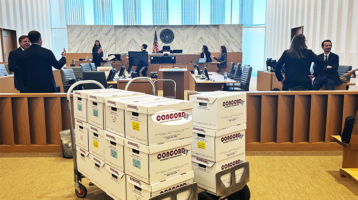
Overnight delivery can be as important as production quality. Southern California litigation teams may need materials delivered to Stanley Mosk Courthouse, First Street Federal Courthouse, or other Superior Court locations on a defined schedule. A provider should confirm delivery instructions, recipient information, and any courthouse access constraints before dispatching the job.
There is a trade-off between speed and revision control. Same-day production is valuable, but only when the final files and instructions are clearly identified. Legal teams can reduce last-minute errors by designating one production contact, providing a final-file naming convention, and confirming the required number of sets before the job moves into production.
When Copying Becomes an eDiscovery Workflow
Many matters begin with boxes of records and quickly expand into email collections, mobile-device data, cloud files, and attorney review. Treating those tasks as separate vendor relationships can create gaps in communication, duplicated handling, and inconsistent production decisions.
A stronger model combines document services with electronic discovery support. Physical records can be scanned, OCR processed, coded, and loaded into a review platform. Electronically stored information can be collected, processed, reviewed, and produced under the same coordinated project management structure.
This is particularly valuable when the matter involves forensic collection of iPhones or email. Preservation must happen promptly and defensibly, but the collected data must also be processed into a format that legal teams can review efficiently. The goal is not merely to gather information. It is to preserve it appropriately, make it accessible to counsel, and prepare it for production or use at trial.
Concord Document Technologies supports these connected workflows with document scanning, legal copying, digital printing, online attorney review, forensic data collection, and RelativityOne-based review services. For a matter with both legacy paper records and modern data sources, one accountable production partner can simplify coordination without reducing control.
Questions to Ask Before Assigning a Copy Job
Before selecting a Santa Monica copy service, legal teams should assess the provider’s ability to manage the actual risk and volume of the engagement. Turnaround time matters, but it should not be the only consideration.
Ask how files and boxes are received, logged, secured, and returned. Confirm whether the provider can maintain project-specific instructions for Bates ranges, branding, confidentiality designations, and document formats. If a deadline is urgent, determine whether the facility has after-hours staffing and 24/7 production capability rather than relying on a standard business-hours promise.
It is also useful to ask who will manage exceptions. Missing pages, unreadable originals, duplicate documents, late file replacements, and changes to a production specification are normal realities of litigation support. An experienced team identifies these issues early, escalates them to the right contact, and documents the resolution.
For sensitive matters, credentials matter. Bonded and insured operations, trained production personnel, controlled access, and experience with regulated records provide a more meaningful measure of readiness than a low per-page estimate. Cost remains relevant, especially in large matters, but rework, delays, and inconsistent productions can cost far more than a carefully managed engagement.
Build a Production Plan Before the Deadline Arrives
The best time to establish a copying and document-production workflow is before the first emergency request. A short kickoff discussion can identify authorized contacts, billing instructions, delivery preferences, naming conventions, security requirements, and the types of work most likely to arise during the matter.
That preparation gives legal teams room to focus on strategy when a production deadline or trial date arrives. Whether the assignment is a small set of hearing binders or a large-scale discovery project, the practical standard is the same: every document should be accurate, accountable, accessible, and ready when counsel needs it.