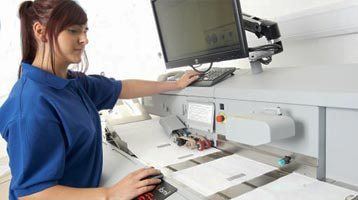
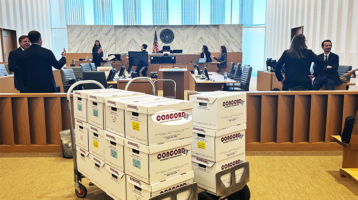
A trial team can have the facts, the witnesses, and the argument – then lose valuable courtroom time because an exhibit binder is missing a page, has mismatched tabs, or does not match opposing counsel’s set. Orange County courthouse exhibit binders are not routine copy jobs. They are litigation materials that must support fast, controlled use at a hearing, settlement conference, arbitration, or trial.
For matters moving through Orange County Superior Court, preparation often happens under compressed timelines. A late ruling, a new declaration, a deposition designation, or a revised exhibit list can change the production plan overnight. The binder must still be readable, complete, properly organized, and delivered where counsel needs it. That requires a production partner that understands both document control and the practical demands of litigation.
What Courtroom-Ready Exhibit Binders Require
An exhibit binder is only as reliable as the workflow behind it. Before printing begins, the production team should confirm the controlling exhibit list, the number of sets, the intended recipient for each set, and any courtroom, department, judge, or case-specific requirements. Court procedures can vary, and a prior format from another matter may not be appropriate for the current proceeding.
The central goal is simple: every person using the materials should be able to find the same exhibit quickly. That means exhibit numbers must correspond to the index, divider tabs, cover sheets, electronic source files, and any list exchanged with the court or opposing counsel. A binder that looks polished but contains inconsistent numbering creates risk rather than solving it.
Quality production also accounts for how the binder will be used. Counsel may need to turn to an exhibit while examining a witness. A clerk may need a clearly marked court copy. A client representative may need a reference set that is easy to follow without becoming part of the formal record. These needs can require different covers, labels, indexes, or color coding, while the underlying documents remain controlled.
Orange County Courthouse Exhibit Binders: Core Components
The right specifications depend on the matter, but a dependable trial exhibit package commonly includes a cover identifying the case and binder volume, a complete exhibit index, durable numbered tabs, and documents produced in the exact order reflected in the index. When the record requires Bates numbering, each page should be checked for sequence, legibility, and placement before final assembly.
Oversized documents, color exhibits, photographs, demonstratives, and native-file printouts deserve separate review. A reduced engineering drawing may be technically included but functionally useless if the text cannot be read. Likewise, a black-and-white copy of a color-coded spreadsheet can erase the distinction counsel needs to make. The production decision should be based on courtroom usability, not merely page count.
A meaningful quality-control process should verify at least the following:
- Exhibit numbers and descriptions match the approved exhibit list.
- Bates ranges are continuous and consistent across all required sets.
- Tabs, indexes, and documents appear in the same order.
- Color pages, foldouts, and oversized materials reproduce clearly.
- Each binder is complete, securely assembled, and labeled for its intended recipient.
This review is particularly valuable when late additions affect binder volume breaks or exhibit numbering. A change to Exhibit 24 should not leave a gap in the index, an outdated tab in a court set, or a different version in counsel’s binder.
Start With the Source Files, Not the Printer
Reliable physical production begins with organized source materials. Litigation teams should provide the final or most current exhibit list, the approved document set, directions for any exclusions or redactions, and instructions on the number and purpose of each copy. If electronic documents are being printed from a review platform, it is wise to confirm that the production reflects the intended versions, families, page-level redactions, and confidential designations.
This is where eDiscovery and trial production intersect. Documents may originate in RelativityOne, a hosted attorney review database, a scanned collection, or a forensic extraction of email and mobile data. The transition from digital review to paper exhibit is a controlled handoff. If the document population changes after review, the production team needs a clear process for identifying what changed, updating the index, and preserving the approved version for printing.
Do not assume a PDF is print-ready just because it opens on screen. Hidden comments, incorrectly applied redactions, broken page orientation, image quality problems, and mixed paper sizes can appear only once the file reaches production. Early file review gives the team time to correct issues before they become courtroom problems.
Plan the Sets and Delivery Chain
The number of binders is rarely limited to the court’s copy. Counsel may need working sets for the examining attorney, second chair, witnesses, expert preparation, opposing counsel, mediator, insurer, or client team. Each set should have a defined purpose. That prevents both overproduction and the more serious mistake of delivering a confidential or attorney-work-product version to the wrong recipient.
Chain-of-custody discipline matters when materials contain sensitive personal information, trade secrets, healthcare records, financial records, or sealed content. The production provider should document receipt of source files, control access during production, confirm delivery instructions, and use secure handling procedures appropriate to the matter. Bonded and insured legal support providers add another layer of institutional accountability when the stakes are high.
For Orange County matters, delivery planning should be treated as part of production, not an afterthought. Confirm the courthouse location, department or receiving contact when applicable, delivery window, parking and access constraints, and whether the materials are intended for filing, courtroom use, or counsel’s preparation. A binder delivered to the right courthouse but after the relevant hearing window has limited value.
Overnight production can be necessary, but it should not mean skipping verification. The best expedited workflows separate urgent steps from careless ones: files are assessed immediately, specifications are confirmed, production begins with controlled checkpoints, and final sets are inspected before dispatch. When a same-day or overnight request arrives late in the process, a provider should clearly identify what can be completed, what information is still needed, and where trade-offs may affect the final package.
When Binders Are Not the Whole Trial Plan
Paper remains effective for many courtroom tasks, especially witness examination, quick reference, and situations where internet access or courtroom technology is uncertain. But it may not be the right answer for every exhibit. Large document collections, multimedia evidence, searchable transcripts, and frequently changing materials may require a coordinated digital presentation plan alongside the physical binders.
The strongest approach is often hybrid. Attorneys can use indexed binders for core exhibits and witness materials while keeping a searchable electronic repository for the broader record. That approach reduces unnecessary printing without leaving the trial team dependent on a single screen or device. It also gives litigation support staff a practical way to manage revisions as the case develops.
For high-volume matters, ask whether the provider can support the entire path from collection and scanning through Bates labeling, online review, printing, and final exhibit assembly. Fewer handoffs generally mean fewer opportunities for version confusion. It also gives counsel one accountable team when a late change requires both electronic and physical updates.
Choose Production Support Built for Litigation
A general print shop can assemble a binder. Legal exhibit production requires more: familiarity with case-driven deadlines, document confidentiality, version control, court-facing presentation, and the difference between a clean copy and a defensible production process. The provider should be prepared to ask specific questions rather than simply accept a print order.
Concord Document Technologies supports document-intensive legal matters with 24/7 production capacity, trial exhibit assembly, litigation copying, scanning, electronic review, and overnight delivery capabilities. For teams facing a hearing or trial deadline, the objective is not simply to produce binders quickly. It is to place accurate, usable, and professionally controlled materials in the hands of the people who need them when the record is on the line.
The most useful closing check is practical: open a finished binder as if you were standing at counsel table. If you can locate every exhibit immediately, read every critical page, and trust that each set matches, the production is ready to support the work ahead.