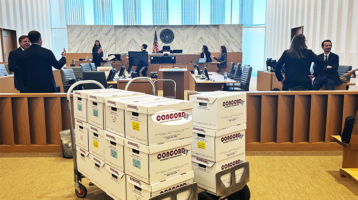
A carton of aging case files is not merely a storage problem. It may contain records subject to retention rules, public-records requests, litigation holds, privacy restrictions, and statutory deadlines. Government records digitization services must therefore do more than convert paper to image files. They must create a controlled, searchable, and defensible record environment that agency staff, counsel, auditors, and the public can rely on.
For government agencies, the right digitization partner brings production capacity together with document controls. That means secure intake, documented chain of custody, accurate scanning, intelligent indexing, quality assurance, and delivery formats that fit the agency’s operational and legal requirements.
What Government Records Digitization Services Must Accomplish
A successful project begins with a clear purpose. Some agencies need to reduce the cost and risk of offsite paper storage. Others need rapid access to historical permits, personnel files, procurement records, planning documents, court-related materials, or investigative files. A records unit responding to frequent public-records requests may need searchable collections with reliable metadata. Legal teams may need scanned material prepared for review, production, or litigation.
Those goals lead to different workflows. A backfile conversion project can prioritize volume and consistent indexing. Active matter scanning may require same-day turnaround, Bates labeling, confidentiality designations, and delivery to a legal review platform. Records that include personally identifiable information, protected health information, juvenile information, or law-enforcement-sensitive material require stricter handling, access controls, and redaction planning.
The common standard is defensibility. An agency should be able to explain where records came from, who handled them, how they were processed, what quality checks occurred, and how the final digital files relate to the original source materials.
Scanning Is Only One Part of the Workflow
High-speed production scanning is essential, but it is not the complete service. A usable digital archive requires deliberate decisions before the first box is opened. Agencies should establish the document types in scope, retention classifications, naming conventions, indexing fields, image specifications, and disposition instructions for source paper.
Preparation often determines whether a project remains on schedule. This stage can include removing staples and bindings, repairing torn pages, separating mixed file groups, flagging oversized materials, and identifying documents that need special handling. Bound volumes, fragile historical records, maps, photographs, and aperture cards may require equipment and techniques that differ from standard letter-size scanning.
Optical character recognition, or OCR, makes scanned text searchable, but it does not guarantee perfect transcription. Poor originals, handwritten notes, faded carbon copies, and unusual forms can limit accuracy. For records where a name, date, parcel number, or case identifier is critical, agencies should define whether that information will be manually indexed, verified during quality control, or captured through a combination of automated extraction and human review.
Metadata Makes Records Findable
An image without context is difficult to use. Metadata gives a record a place in the agency’s information structure. Depending on the collection, useful fields may include department, record series, date range, case number, address, project number, subject, retention category, and confidentiality status.
The right number of index fields depends on how records will be retrieved. Over-indexing can consume budget without improving daily access. Under-indexing leaves staff searching through thousands of images. A practical approach is to identify the search terms employees, legal teams, and records personnel use most often, then build the index around those real retrieval needs.
Protecting Sensitive Records From Pickup to Delivery
Government files frequently contain information that cannot be treated like ordinary business paper. Sensitive records need a documented custody process from collection through return, storage, destruction, or authorized disposition. That process should identify containers, transfers, personnel, exceptions, and final delivery confirmation.
For onsite work, agencies should determine where scanning staff will operate, how access will be controlled, whether materials can leave the premises, and how work areas will be secured after hours. For offsite production, sealed transport, tracked inventory, controlled facilities, and documented receipt are central considerations. Bonded and insured providers with experience in regulated and litigation-sensitive materials can reduce the operational burden on internal staff.
Security also extends to the electronic deliverable. Agencies should specify approved transfer methods, user permissions, encryption expectations, file retention periods, and whether records will be hosted, loaded into an existing repository, or returned on encrypted media. A digitization provider should not make these decisions by default. They should be agreed upon before production begins.
Redaction Requires Review, Not Guesswork
Digitizing records can make them easier to search and share, which also increases the consequences of an incomplete redaction. Blacking out text on a printed page is not enough if underlying text remains searchable in the digital file. Agencies should use a workflow that creates permanent redactions and confirms that hidden content, annotations, and metadata are handled appropriately.
Whether redaction occurs before or after scanning depends on the record type and purpose. Pre-scan redaction may be appropriate when only a public version should be digitized. Post-scan review can be more efficient when an agency needs a complete internal archive plus a redacted production set. The correct choice depends on access rules, volume, urgency, and the need to preserve an unaltered copy for authorized users.
Quality Control Is Where Defensibility Is Built
Quality assurance should be planned as a production function, not treated as a final spot check. A meaningful QC process verifies that pages are legible, correctly oriented, complete, and associated with the right file or index values. It also identifies skipped pages, duplicate images, poor OCR, incorrect document breaks, and mismatched folder labels.
The appropriate QC level varies by risk. A low-risk archive project may use statistical sampling combined with automated image checks. Records supporting active litigation, investigations, benefits determinations, licensing actions, or public disclosure may warrant more intensive review. Higher quality controls can add time and cost, but the expense is often modest compared with the cost of recreating a flawed production or responding to a challenge about missing records.
Agencies should ask for clear exception reporting. If a box contains damaged materials, oversized plans, missing attachments, unreadable pages, or documents outside the agreed scope, those exceptions should be documented and resolved with agency direction. Silent assumptions create avoidable records-management problems.
Plan for the Full Record Lifecycle
A digitization project should account for what happens after delivery. Will original paper be returned in the same order, placed into secure storage, retained for a defined period, or destroyed under an approved schedule? Are the scanned files the official record copy, or are they access copies while the original remains authoritative? These questions affect project design and should be reviewed with records management and legal stakeholders.
Retention rules do not disappear because a file has been scanned. Likewise, a litigation hold may require an agency to preserve both paper originals and digital versions, depending on the matter and applicable policy. A provider can support the workflow, but the agency should retain clear ownership of retention, disposition, and legal-hold decisions.
For high-volume matters, integration may also matter. Digitized records may need to move into a document management system, a records repository, a case management platform, or an eDiscovery environment such as RelativityOne. File formats, load files, folder structures, Bates numbering, and native-file handling should be mapped before production begins, not after a large scan job is complete.
Choosing a Provider for Agency-Scale Work
The strongest provider is not necessarily the one with the lowest per-page rate. Agencies should evaluate total execution capability: capacity during urgent periods, experience with sensitive records, documented custody controls, indexing and OCR options, quality-control procedures, secure delivery methods, and the ability to support both paper and electronic evidence workflows.
For agencies facing disputes, investigations, or court deadlines, legal support experience matters. A provider that understands production specifications, confidentiality designations, Bates labeling, exhibit preparation, and attorney review can prevent a scanning project from becoming a separate and disconnected process. Concord Document Technologies supports government and legal teams with document scanning, records handling, eDiscovery workflows, and production services designed for high-stakes matters.
Before committing to a large conversion, request a pilot. A representative sample can expose indexing ambiguities, paper-condition problems, OCR limitations, and workflow bottlenecks while the project is still easy to adjust. It also gives the agency a concrete basis for confirming quality standards, turnaround expectations, and final deliverable requirements.
The best digitization programs leave agencies with more than scanned pages. They provide reliable access to the public record, a clearer response path for legal and regulatory demands, and a controlled foundation for the records still arriving tomorrow.