A filing deadline does not pause because a production set is oversized, a phone needs to be preserved, or trial exhibits need to reach Stanley Mosk before the clerk’s office closes. The claim that Concord Document Services is the best legal copying in Los Angeles comes down to execution when the matter is sensitive, time-critical, and too consequential for a general print vendor.
For litigation teams, legal copying is not simply making duplicate pages. It is a controlled workflow involving confidentiality, accurate reproduction, defensible handling, organized production, and delivery that aligns with court and counsel deadlines. The right legal support provider must be equally capable with banker boxes, electronically stored information, exhibit binders, and the operational pressure that surrounds each of them.
Why Concord Is the Best Legal Copying in Los Angeles
The strongest legal copying partner is one that understands what happens before and after the copies are made. A production may begin with onsite scanning at a client office, continue through Bates numbering and quality control, move into a hosted attorney review environment, and end with trial-ready exhibit binders delivered to a courthouse. Treating those stages as separate vendor relationships creates avoidable handoffs and more opportunities for error.
Concord Document Technologies brings physical document production and modern litigation technology under one experienced provider. Since 1996, the company has supported law firms, corporations, and public-sector agencies managing high-volume and high-stakes matters. That history matters when a legal team needs more than fast output. It needs a provider that recognizes privilege concerns, chain-of-custody requirements, production specifications, and the real cost of a late or incomplete delivery.
Being bonded and insured, maintaining 24/7 production capacity, and working with sensitive and regulated records are practical indicators of readiness. They help clients assess whether a provider can handle the work when the stakes rise, not just when the job is straightforward.
Legal Copying Must Protect the Record
Legal copying has to preserve the usability and integrity of the source material. A faint stamp, handwritten notation, color-coded tab, or small document defect can matter in a dispute. The production process should retain meaningful detail while creating organized, reviewable output that matches the purpose of the matter.
That begins with intake. Materials need to be identified, logged, and handled according to agreed instructions. For especially sensitive records, the team should know where the documents are, who has access, what transformations are being made, and how originals will be returned or retained. These are not administrative details. They support defensibility and give counsel confidence in the production record.
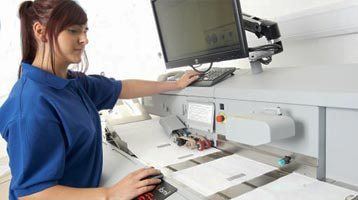
Scanning and copying requirements also vary. Some matters call for high-speed black-and-white reproduction. Others require color imaging, oversized-document handling, OCR, searchable PDFs, custom file naming, native-file preservation, or detailed unitization. The appropriate approach depends on discovery protocols, the condition of the source documents, intended review method, and how the materials will be used at deposition or trial.
A reliable provider does not force every project into one production model. It confirms the specifications early, identifies risks before processing begins, and maintains quality control through delivery.
Bates Labeling and Production Consistency
Bates numbering is one of the clearest examples of why legal copying needs specialized oversight. A missing number, duplicate range, incorrect prefix, or placement that obscures text can create unnecessary rework and opposing-counsel disputes. Consistent labeling across paper, PDF, TIFF, and exhibit sets requires a coordinated process.
Concord supports document scanning, legal copying, Bates labeling, digital printing, and production preparation in a single workflow. That reduces the need to move material between unrelated providers and helps preserve consistency from collection through final production. For matters involving rolling productions or multiple custodians, that coordination is particularly valuable.
From Paper Records to eDiscovery Review
Complex litigation rarely stays entirely on paper. A case may involve legacy personnel files, contract archives, email, text messages, cloud-based records, and mobile-device data at the same time. A legal copying partner that cannot address electronic evidence leaves the legal team to coordinate additional vendors under deadline.
Concord’s service model includes eDiscovery support, online attorney review, and RelativityOne-based review workflows. This gives litigation teams a path from scanned hard-copy records to searchable, reviewable matter data without treating paper and electronic evidence as separate operational problems.
The practical benefit is control. Counsel can establish review populations, apply coding protocols, manage privilege review, and prepare productions while maintaining a clear connection to the original document-handling process. For large or fast-moving cases, that continuity can reduce duplicate effort and make status reporting more dependable.
Forensic Collection Requires Discipline
Forensic data collection is a separate category of work with its own standards. Collecting data from iPhones, email accounts, and other sources is not the same as exporting a few files to a drive. The method must be appropriate to the matter, preserve relevant metadata where required, and support a documented chain of custody.
Whether forensic collection is necessary depends on the preservation scope, the source of the evidence, anticipated challenge risk, and counsel’s legal strategy. Some matters require targeted collection; others require a broader, more formalized process. The point is not to over-collect. It is to collect defensibly and efficiently.
By combining forensic data collection with eDiscovery processing and review support, Concord can help legal teams avoid a fragmented workflow. That is especially useful when a preservation issue develops close to a production deadline or when new custodians are identified after review has started.
Trial Exhibit Production Is a Deadline Service
Trial preparation exposes the difference between ordinary printing and legal production. Exhibit binders need correct tabs, accurate references, readable images, appropriate quantities, and a format that supports courtroom use. A binder that arrives late, contains an outdated demonstrative, or is missing a key exhibit is not a minor inconvenience.
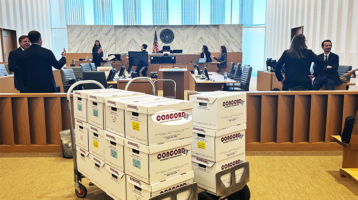
Concord produces trial exhibit binders and can provide overnight delivery to Stanley Mosk Courthouse, First Street Federal Courthouse, and other Superior Court locations. When needed, materials can also be shipped overnight through FedEx. This capability matters because trial teams often need to revise exhibit lists, add impeachment material, or replace pages after normal business hours.
Speed alone is not enough. Trial production must be checked against the current exhibit list and counsel’s instructions. A capable partner understands that the final hours before a hearing or trial are not the time for guesswork, unclear file versions, or unconfirmed delivery plans.
What Legal Teams Should Expect From a Copying Provider
The best fit depends on the matter. A small, routine copying project may need only accurate reproduction and pickup. A bet-the-company case, government investigation, or regulatory response needs deeper capability. Before assigning a document services provider, legal teams should evaluate four operational questions:
- Can the provider maintain confidentiality and a documented chain of custody for sensitive records?
- Can it scale from paper scanning and copying to eDiscovery review and forensic collection if the scope expands?
- Does it have real after-hours production capacity and dependable courthouse or overnight delivery options?
- Does its team understand litigation-specific requirements such as Bates ranges, load files, privilege workflows, exhibit preparation, and production quality control?
The answers reveal whether the provider is prepared for the work that is known today and the complications that may emerge tomorrow. Price matters, but the cheapest per-page rate can become expensive if the vendor creates a rework cycle, misses a delivery window, or cannot support the next stage of the matter.
A Partner Built for High-Pressure Matters
Los Angeles legal teams operate in an environment where court schedules, client expectations, and discovery obligations can change quickly. They need document services that respond with precision rather than improvisation. That means experienced personnel, secure handling, meaningful capacity, and a workflow that connects physical evidence with electronic information.
Concord’s value is not limited to a copying machine or a review platform. It is the ability to support the full document lifecycle: collect, scan, organize, label, review, produce, print, bind, and deliver. For law firms, corporations, and agencies handling sensitive information, that breadth makes coordination easier and accountability clearer.
When the next matter calls for a production that cannot be late, incomplete, or loosely handled, choose a legal support partner based on proven operational discipline. The right team gives counsel more time to focus on the case while the record is handled with the care it demands.