A single iPhone can hold the only contemporaneous record of a disputed conversation, a location history that tests a witness account, or attachments never retained in corporate email. To preserve iPhone litigation data defensibly, legal teams must act before routine use, syncing, deletion, device replacement, or remote-management changes alter what may be relevant.
The goal is not simply to make a copy of a phone. The goal is to preserve potentially responsive electronically stored information in a manner that can be explained, repeated, and defended. That requires early scoping, careful handling, documented custody, and a collection method that matches the matter’s risks.
Start With the Preservation Trigger
The obligation to preserve may arise well before a complaint is filed. A demand letter, an internal investigation, a regulatory inquiry, a credible threat of litigation, or facts suggesting a dispute can all require counsel to evaluate preservation. For iPhone data, delay is especially costly because messages may be configured to disappear, users may upgrade devices, and cloud synchronization can change the available data set.
Issue a targeted legal hold that identifies the people, devices, accounts, and categories of information at issue. A generic instruction not to delete “documents” is not enough for mobile evidence. Custodians should understand that responsive information may exist in text messages, iMessage, email, photographs, call records, voicemail, collaboration apps, browser activity, notes, files, and location-related artifacts.
The hold should also address related sources. An iPhone may synchronize with iCloud, a work email platform, a mobile device management system, a Mac or PC backup, and third-party applications. Preserving the handset without considering those sources can leave material gaps. Conversely, preserving every possible data source without a defensible scope can increase cost, privacy exposure, and review burden. The right approach depends on the allegations, date range, custodian role, and governing discovery obligations.
Do Not Let Normal Phone Use Alter Evidence
An iPhone is not static evidence. Everyday activity can change it. A user can send new messages, delete conversations, clear browser history, update applications, rotate credentials, enable disappearing-message settings, or replace the device. System updates and synchronization can also affect available artifacts.
Once a device is identified for preservation, give the custodian direct instructions. They should not reset, trade in, sell, repair, or replace the phone without notifying legal or litigation support. They should not delete applications, messages, photos, files, or call records. They should also avoid changing settings related to message retention, iCloud, backups, and account access unless counsel or a qualified forensic professional directs the change.
That does not always mean the phone must be taken out of service. In many matters, the custodian needs it for work and personal life. Continued use can be managed when the device is documented, preserved promptly, and subject to a clear collection plan. If the device contains particularly sensitive or high-risk evidence, however, counsel may decide that prompt physical control or a forensic collection is warranted.
Select a Collection Method That Fits the Matter
There is no single iPhone collection method that fits every litigation. The appropriate method turns on the issues in dispute, the expected data types, the device model and operating system, available credentials, encryption status, applicable privacy concerns, and the level of forensic scrutiny the matter is likely to receive.
A targeted collection may be appropriate when the matter concerns a limited period, defined communications, or a narrow set of business applications. This can reduce cost and limit the collection of personal information. It may also be insufficient where deleted data, application artifacts, metadata, or device-level activity could become material.
A logical extraction can capture a meaningful range of accessible user data, depending on the device and collection tools. It is often useful for messages, contacts, photos, call information, and certain application content. A more comprehensive forensic approach may be needed where the dispute turns on authenticity, timing, location, deleted material, or whether a particular application was used.
Cloud sources require their own analysis. iCloud content may contain photographs, files, backups, messages, or other synchronized material that is not fully represented on the device. But cloud collection should not be treated as an automatic substitute for handset collection. The content available through an account can differ from the information retained locally, and account-level access introduces authentication, consent, privacy, and documentation considerations.
Counsel should avoid relying solely on screenshots supplied by a custodian. Screenshots may be useful for initial assessment or demonstrative purposes, but they frequently omit metadata, surrounding context, attachments, and information needed to establish completeness. They are rarely a complete preservation strategy in a contested matter.
Document Chain of Custody From the First Contact
A defensible preservation process creates a record of what happened, who handled the device or data, and when each action occurred. This documentation matters whether the collection is later challenged or simply needs to be explained to opposing counsel, a regulator, or the court.
At minimum, the collection record should identify the custodian, device make and model, phone number when relevant, operating system, device identifiers, collection date and time, collector, collection method, credentials or consent status where applicable, and the resulting data set. It should also record transfers of possession, storage locations, and any deviations from the planned workflow.
Forensic collections should be validated through documented processing and integrity controls. Where supported by the workflow, hash values help demonstrate that the collected output has not changed after acquisition. The original device should be handled with care, protected from unauthorized access, and maintained according to the matter’s preservation plan.
Physical custody is only one part of the chain. Access to the extracted data must also be controlled. Mobile collections often contain highly personal material, privileged communications, health information, financial records, and information concerning third parties. Limit access to authorized personnel, maintain appropriate security controls, and use a review workflow that supports segregation and production decisions.
Plan for Privacy, Privilege, and Proportionality
Mobile-device discovery creates genuine privacy concerns, particularly with personally owned devices used for work. The answer is not to ignore the phone. It is to apply a collection and review protocol that is proportionate to the case and clear about what will be handled.
Early agreement on search terms, date ranges, relevant applications, protected categories, and privilege procedures can prevent later conflict. In some matters, a neutral or agreed forensic protocol is appropriate. In others, counsel may need to collect broadly for preservation while using culling, filtering, and attorney review to limit what is reviewed or produced.
The distinction between preservation and production is critical. Preserving a broader set of potentially relevant material can be prudent while the legal team determines what is responsive, privileged, confidential, or outside the agreed scope. Production decisions should follow a documented review process, not an assumption that everything collected must be handed over.
Move iPhone Data Into a Reviewable Workflow
Collection is only the first operational step. The data must be processed into forms that attorneys can assess efficiently and that production teams can manage accurately. Messages may need to be rendered with participants, timestamps, attachments, and conversation context. Photos and videos may require metadata handling. Application data can demand specialized parsing and normalization.
For matters involving significant volumes or multiple custodians, the mobile collection should be coordinated with the broader eDiscovery workflow. That means aligning it with email, cloud files, scanned paper records, and other ESI in the review platform. A disconnected mobile-data process creates avoidable duplication, inconsistent coding, and production risk.
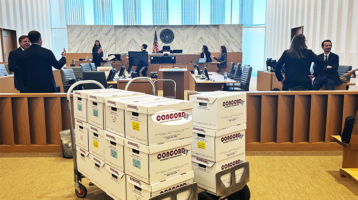
Concord Document Technologies supports forensic iPhone and email collection alongside RelativityOne-based review, document processing, scanning, Bates labeling, and trial exhibit production. For counsel managing a high-stakes matter, that integrated approach helps maintain continuity from preservation through review and courtroom-ready deliverables.
Build a Repeatable Mobile Preservation Protocol
The strongest response is prepared before the urgent call arrives. Organizations and law firms should maintain an escalation path for mobile evidence, identify approved collection resources, and train legal, IT, HR, and investigations personnel on when to involve counsel. A written protocol should address employee-owned devices, corporate devices, executive departures, device upgrades, account access, and retention of mobile communications.
The protocol should also recognize that technical feasibility changes. New iPhone models, operating system releases, security settings, and application designs may affect what can be acquired and how reliably it can be interpreted. Reassess the collection plan when the device, facts, or legal stakes change rather than assuming an earlier method remains adequate.
When mobile evidence may matter, speed and discipline are more valuable than improvisation. A properly preserved iPhone can provide reliable evidence. A casually handled one can turn a manageable discovery issue into a dispute about spoliation, completeness, or credibility. Engage qualified support early, document each decision, and preserve enough context for the evidence to speak clearly when the matter reaches review, negotiation, or trial.